By Elizabeth Harris, RD
If there’s one thing I hear more than almost anything else in my work as a dietitian, it’s that people often struggle with what to eat for lunch, especially when they’re trying to eat healthy. When I ask what makes lunch so challenging, people tell me they don’t have time to prepare anything, packing something for the office feels like a chore, they second-guess whether their choices are “healthy enough,” or they simply get tired of eating the same things on repeat.
Fortunately, lunch doesn’t have to be elaborate or time consuming to nourish you effectively. A simple framework I like to recommend is to make sure it includes protein, fiber-rich carbs, and some heart healthy fat. Together, these are the building blocks of a balanced, satisfying meal that can keep you feeling energized, focused, and full for hours.
To put this framework into practice, aim to keep a few easy protein options on hand each week — tofu, tempeh, canned beans, quinoa, eggs, and other lean proteins all work well. Pair your protein with a fiber-rich carb like whole grain bread, whole wheat pasta, farro, bulgur, or a white or sweet potato. Then add in a bit of heart-healthy fat like avocado, nuts, seeds, or olive oil to round it out. With some strategic shopping, a little bit of creativity, and a mix-and-match mindset, a healthy lunch really can come together quickly and easily.
And here’s something important that simply doesn’t get said often enough. Convenience options can be very helpful. They’re not cheating, don’t have to mean compromising on your health goals, and there are plenty of great options to choose from, especially if you know what to look for.
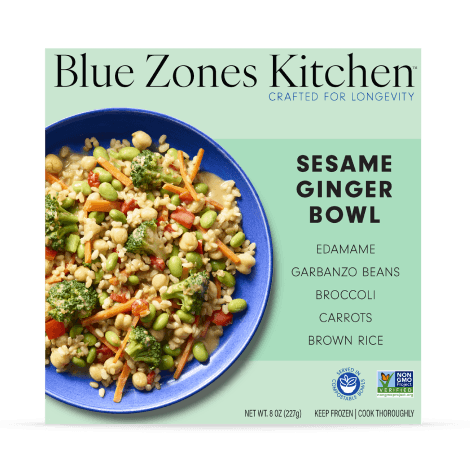
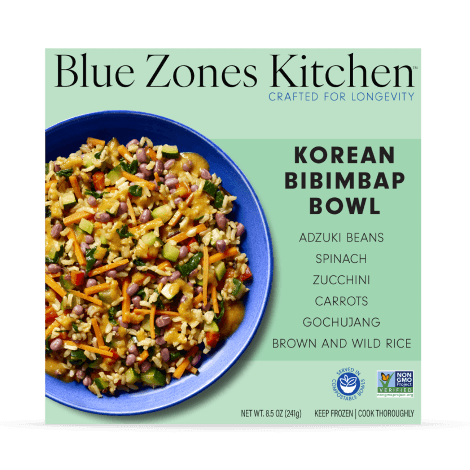
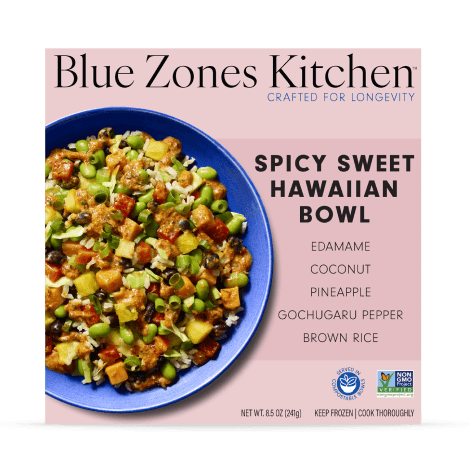
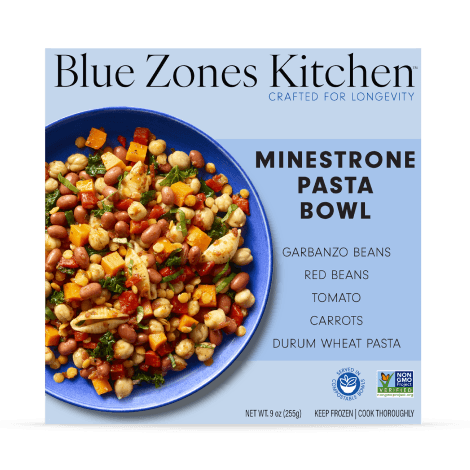
Here’s how I evaluate convenience foods as a nutrition professional, and why Blue Zones Kitchen’s plant-based meals stand out as a choice I love to eat and recommend to my clients. First and foremost, I want my food to taste good, and their meals do! But beyond that, I look to see if it’s made of primarily whole food ingredients similar to what I would buy and stock in my own kitchen. Blue Zones Kitchen meals are packed with beans, grains, olive oil, and a variety of herbs and vegetables.
Remember the simple meal-building framework I shared above? Next, I check to see how much protein and fiber the food or meal contains. Most Blue Zones Kitchen meals offer ten or eleven grams of high-quality, plant-based protein and with at least seven grams of fiber they provide a meaningful chunk of your recommended daily target. Since most people fall well short on fiber, getting this much in one frozen meal is a big win.
Lastly, I always look at sodium and added sugar — two areas where a lot of otherwise decent convenience options miss the mark. Blue Zones Kitchen keeps sodium at a reasonable level by leaning instead on herbs and spices for flavor and their meals contain no added sugar, which is fantastic.
Taken together, that’s a hard combination to come by in a packaged meal and is what separates a convenience option worth recommending from one that may taste good but doesn’t offer much nutritional value. So, the next time lunch sneaks up on you, and you find yourself choosing between skipping it altogether or running to the nearest fast-food restaurant, try this. Head to your freezer, grab a Blue Zones Kitchen meal, and enjoy it with confidence, knowing you’re giving your body the nutrients it needs to thrive. Simple, fast, and nutritious!